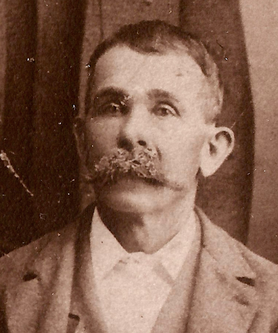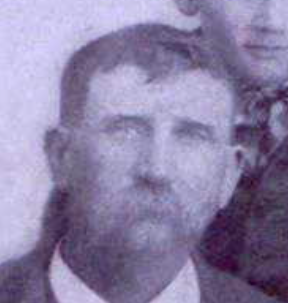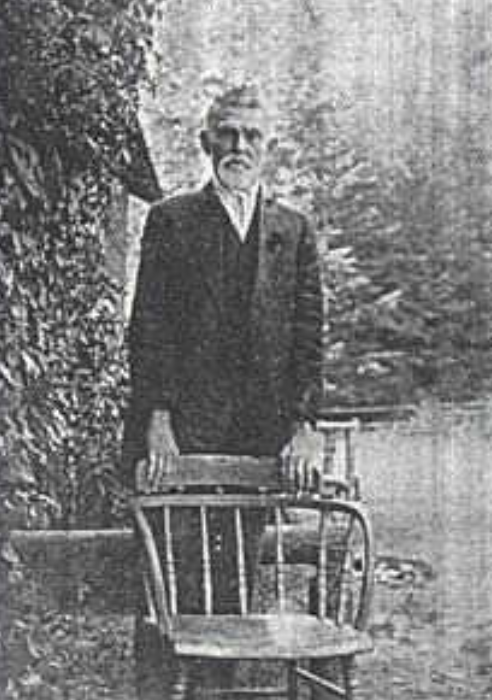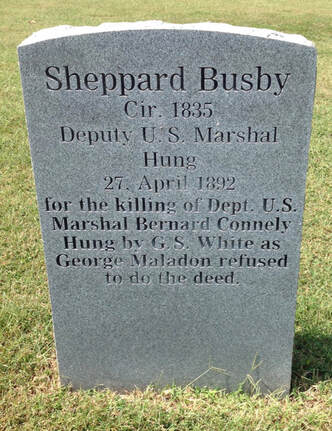
This guy's a shirt-tail relative - married to my great-grandma's sister - but too good not to include. A former marshal who rode with Hangin' Judge Parker, he himself shot a marshal who was going to charge him with adultery. The first hangman refused to do it because they had both fought in the Civil War. A second hangman was quickly found.
About a year ago, I got records for my great-great grandfather, John C. Bond, born in 1804, from the National Archives, which holds a lot of military records.
Before, I had no proof he was my great great grandfather. All I had to go on was that he shared a last name and location with my great grandmother (picture), and most importantly, I DNA matched some descendants of his other children. The National Archives had a page from a family book that had all his children’s names and birth dates—including my great grandmother Martha!
There were a lot of surprises in the documents. It turns out John was a bit of a scoundrel. He was a shoemaker, who also served in the military over and over, including in the Florida War and the Mexican War. He claimed in 1847 that he never sold his land grant from his military service, but it sure looks like his signature on the form. He also lied about his age to serve in the Civil War (he was otherwise too old). One of his friends in the Civil War was Shepherd Busby, who later married John’s daughter and even later was hung for murder. Shortly after the war, John supposedly drowned “on the Tennessee river” but there is no grave for him.
Meanwhile, other records show that a John C. Bond married a Nancy Jane Turner in 1867 and a Nancy Williams in 1870 in Lawrence County, Alabama. One of the documents has a signature—and it’s his! Four years after he supposedly drowned! Yet by the 1870 census, John is shown as a widowed shoemaker In Lawrence. You might wonder how he could be both married and widowed in the same year, but it turns out the 1870 census was conducted through the summer of 1871.
I don’t know if John faked his own death in 1866 to allow himself to remarry, or if he just took off and my great-great grandmother Elinor later claimed he drowned so she could get his pension in 1890. (Pension requests usually required proof of death—but the nice thing about claiming your husband had been swept away and never seen again was that you wouldn’t have to point to a grave.) Elinor probably felt she deserved it. After all, she was the one who had to raise their dozen children while John was off at war after war.
Before, I had no proof he was my great great grandfather. All I had to go on was that he shared a last name and location with my great grandmother (picture), and most importantly, I DNA matched some descendants of his other children. The National Archives had a page from a family book that had all his children’s names and birth dates—including my great grandmother Martha!
There were a lot of surprises in the documents. It turns out John was a bit of a scoundrel. He was a shoemaker, who also served in the military over and over, including in the Florida War and the Mexican War. He claimed in 1847 that he never sold his land grant from his military service, but it sure looks like his signature on the form. He also lied about his age to serve in the Civil War (he was otherwise too old). One of his friends in the Civil War was Shepherd Busby, who later married John’s daughter and even later was hung for murder. Shortly after the war, John supposedly drowned “on the Tennessee river” but there is no grave for him.
Meanwhile, other records show that a John C. Bond married a Nancy Jane Turner in 1867 and a Nancy Williams in 1870 in Lawrence County, Alabama. One of the documents has a signature—and it’s his! Four years after he supposedly drowned! Yet by the 1870 census, John is shown as a widowed shoemaker In Lawrence. You might wonder how he could be both married and widowed in the same year, but it turns out the 1870 census was conducted through the summer of 1871.
I don’t know if John faked his own death in 1866 to allow himself to remarry, or if he just took off and my great-great grandmother Elinor later claimed he drowned so she could get his pension in 1890. (Pension requests usually required proof of death—but the nice thing about claiming your husband had been swept away and never seen again was that you wouldn’t have to point to a grave.) Elinor probably felt she deserved it. After all, she was the one who had to raise their dozen children while John was off at war after war.